Sweet Citrus Meets Briny Bite: Try This Stunningly Simple Blood Orange & Kalamata Salad
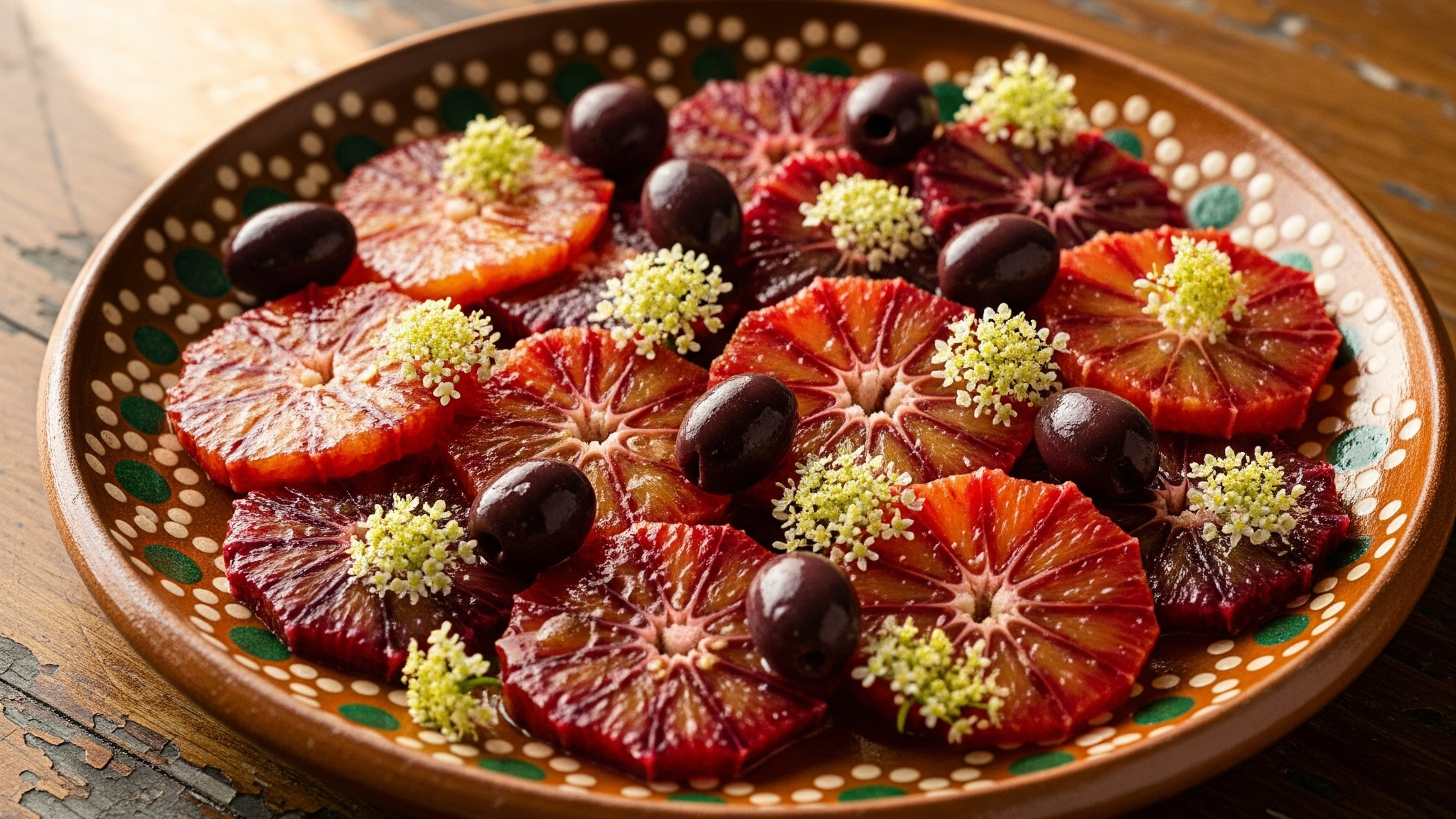
Summer is here and sometimes all you need is something simple, bright, and beautiful on your plate. Enter: the Blood Orange Kalamata Salad with Fennel Flowers, a dish that feels like summer poetry, equal parts color and character.
The Recipe
Ingredients:
- 2 blood oranges, peeled and sliced thin
- ¼ cup pitted Kalamata olives
- Extra virgin olive oil (for drizzling)
- Fennel flowers (light sprinkle)
- Finishing sea salt (like Maldon)
Instructions:
Layer the oranges, scatter the olives, drizzle with oil, and finish with fennel and a sprinkle of a nice finishing salt. That’s it.
Why This Salad Works (Nutrition + Flavor)
This isn’t just a pretty plate, it’s a nutrient-packed powerhouse disguised as a Mediterranean summer.
Here’s what you’re really getting:
- Blood Oranges: Rich in vitamin C, fiber, and anthocyanins (powerful antioxidants responsible for their ruby hue), blood oranges support immune function, collagen production, and heart health.
- Kalamata Olives: These dark purple gems bring in heart-healthy monounsaturated fats, vitamin E, and a punch of flavor. They also contain polyphenols, which may help reduce inflammation.
- Olive Oil: A drizzle of extra virgin olive oil brings more than richness, it adds anti-inflammatory oleic acid and antioxidants.
- Fennel Flowers: A delicate garnish, fennel flowers not only provide a gentle anise aroma but have been used for centuries to aid digestion.
- Finishing Salt: A sprinkle of high-quality sea salt enhances the citrus and balances the brine.
Fun Facts to Nibble On
Kalamata Olives: Fit for Kings (and Goddesses?)
Named after the Greek city of Kalamata in the Peloponnese, these olives have been harvested since ancient times. They were traditionally hand-picked to avoid bruising and cured in wine vinegar or brine. Legend has it that the goddess Athena gifted olives to humanity—a nod to their long-standing place in Mediterranean culture and cuisine.
Blood Oranges: Nature’s Crimson Treasure
Blood oranges likely originated in Sicily or Spain, and their deep red pigment is derived from anthocyanins, a rare antioxidant found in citrus. Historically, they were considered exotic and luxurious, favored by European royalty, and only grown in regions with hot days and cool nights. They’re still celebrated in Italy today during winter citrus festivals.
How to Enjoy It
Serve this salad chilled, on its own, or as a vibrant bed for a beautifully grilled piece of fish.
Final Thought
Like the best recipes, this salad is more than the sum of its parts. It’s a reminder that food can nourish both body and spirit. A dish like this doesn’t just feed you, it beckons you to call a few friends and savor its deliciousness together.