Seeing With Endurance: Frida Kahlo, Deborah Szekely, and the Art of Visual Fitness

What do Frida Kahlo and Deborah Szekely have in common?
Endurance, clarity, and a way of seeing that turns lived experience into wisdom. Recently featured guest presenter Renee Sandell explores that shared ground through Visual Fitness 4 All®, an immersive, art-based program that invites guests to slow down, look closely, and reconnect with creativity. No art background required.
To explore how those shared qualities come to life at the Ranch, I asked Renee about Visual Fitness, what it means to develop “new eyes,” and how art can help us see and live more fully.
For guests who may be new to Visual Fitness, how do you describe what you’re inviting people into this week? What does it mean to “develop new eyes,” and why does that feel especially relevant right now both at the Ranch and out in the world?
Visual Fitness is really for everybody. We live in a very visual world; we’re constantly looking at screens and images, but many of us don’t actually have the skills to decode meaning or to encode it ourselves. We buy ready-made cards, we consume images, but we don’t always make our own or slow down to really see.
Visual Fitness gives people what I call a kind of birthright, the ability to see more clearly. I teach this through what I call a Balanced Way of Seeing, using Form + Theme + Context. Form is everything you can observe directly. The theme is what you can begin to discern from what you see. Context is what you can’t see at first, the historical, social, and personal layers that complete understanding. When these three come together, perception becomes richer and more humane.
Here at The Ranch, we start by looking at one very relevant work: Frida Kahlo’s Self-Portrait on the Borderline Between Mexico and the United States from 1932. We’re on the border, and so is the painting. We look closely, we notice objects, we become curious. We do it collaboratively. First, we look at what we can see, then what we can discern, and then I add context, the story of the artist, the history, what you can’t see at first.
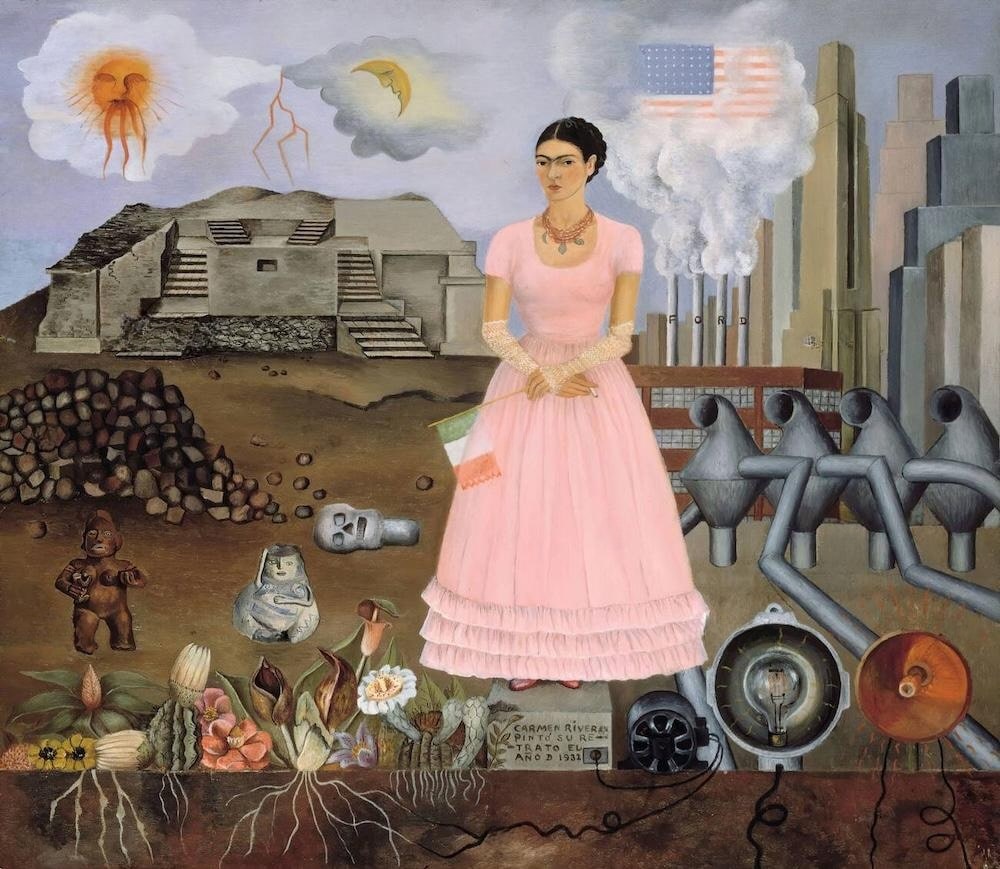
Developing new eyes is really about taking time. I use the metaphor of an artichoke. You can’t just bite into it. You have to prepare it, peel back layers, and if you stay with it, you get to the heart. A work of art just sits there; we are the ones who have to peel the layers of meaning. The longer we stay with it, the more we see.
So it becomes a relationship with a work of art. Not memorizing a hundred slides, but really owning a few works in your heart. That way of seeing carries into life. It helps people slow down, notice more, and see with more depth, and I think that’s especially important right now.
Your classes are very hands-on, marking and mapping, conversing with artwork, working with line and color. What do people tend to discover once they stop trying to “make art” and instead let themselves experience art?
What people discover is often a sense of permission.
Early in the week, guests engage in what I call a “conversation” with a single artwork. They spend real time with it, tracing it, writing first impressions, journaling, even composing a poem. There’s no pressure to be right. They’re simply responding to the artwork.
We start by decoding meaning, looking at art through form, theme, and context, so people begin to see more fully, to see the bigger picture. Then we move into an individual experience where they actually spend time conversing with a single work of art.
They trace it, they write, and eventually they write a poem. By the time they get to the poem, they’ve spent so much time looking and thinking in different ways that it’s very natural. Then they meet with others who have spent the same half hour with the same work, and they share their journeys and read their poems. It’s very meaningful to see how differently people experience the same piece.
After that, I give them notes and context so they can verify, add data, and deepen their understanding. The first two days are really about decoding meaning, and that’s applicable to many things in life.
Then we move into creativity. We use a portable studio, a special kit with tools, and we start with simple experiments. One exercise is analog drawing, where people express emotions such as anger and joy through line. They close their eyes, remember a specific moment, and make a mark. When everyone puts their work together, they’re amazed by how unique and how related the drawings are.
People discover that creativity is accessible. They’re developing skills they can use anywhere. They learn to trust their own expression. And they realize that this isn’t about making “good art.” It’s about expression, awareness, and seeing.
You anchor part of the week in Frida Kahlo’s work and her life. What is it about her endurance, not just her pain, but her clarity and presence that continues to offer insight into how we meet our own lives?
I feel that we are always on the border in our lives. Frida did so many self-portraits because she felt she knew herself better than anything. She was her subject. Of course, she experienced incredible pain; she was in a trolley accident, and her spine was broken, her uterus was damaged, but I really emphasize her endurance, not just her suffering.
She wasn’t fully recognized for her artistic strengths while she was alive, and was overshadowed by her husband, Diego Rivera. She’s become an icon now, but sometimes she’s still overshadowed by her story rather than her clarity and strength.
What I try to bring forward is how she continued to create, to reflect, to know herself deeply, even in the midst of hardship. That endurance, that presence, is something people can relate to. It’s not just about pain. It’s about how you meet your life.
You connect Frida Kahlo’s endurance with Deborah Szekely’s wisdom and teachings. Where do you see their lives and teachings converging, and what can guests learn from seeing them side by side?
On the surface, they do seem very different. But when I place them side by side, what emerges is a shared commitment to vision and integrity.
With Frida, we engage through her artwork and life story. With Deborah, I focus on her words and her teachings.
I’ve been painting Deborah’s words for about twenty years. Her wisdom has really guided me through aging and living. Some of the things she has shared have deeply influenced me, and so much of it is about positivity, integrity, and resilience.

I realized I had created a campaign around Deborah’s Lesson 49: Practice the re-s! –renew, refresh, reawaken, relax, reconnect, reimagine, recreate, recharge, restore, & redirect, first in my art, and now I’m sharing it with guests. Both women model authenticity. Neither offers shallow optimism. There’s wisdom and discipline in their lives. They show us how to remain vital over time.
We’re living in a time where we need positivity, not in a Pollyanna way, but grounded in wisdom and critical thinking.
For me, both women model endurance and authenticity in different ways. Deborah is someone I have a real relationship with. Frida is someone I know through her work. But both help people slow down, focus, and connect to themselves and to others.
Guests create Virtue Maps and take these pieces home. What do you hope that card becomes for them once they leave the Ranch?
First of all, many people are surprised that they could do it. It’s very pleasurable. They create something authentic and tangible that they can take home.
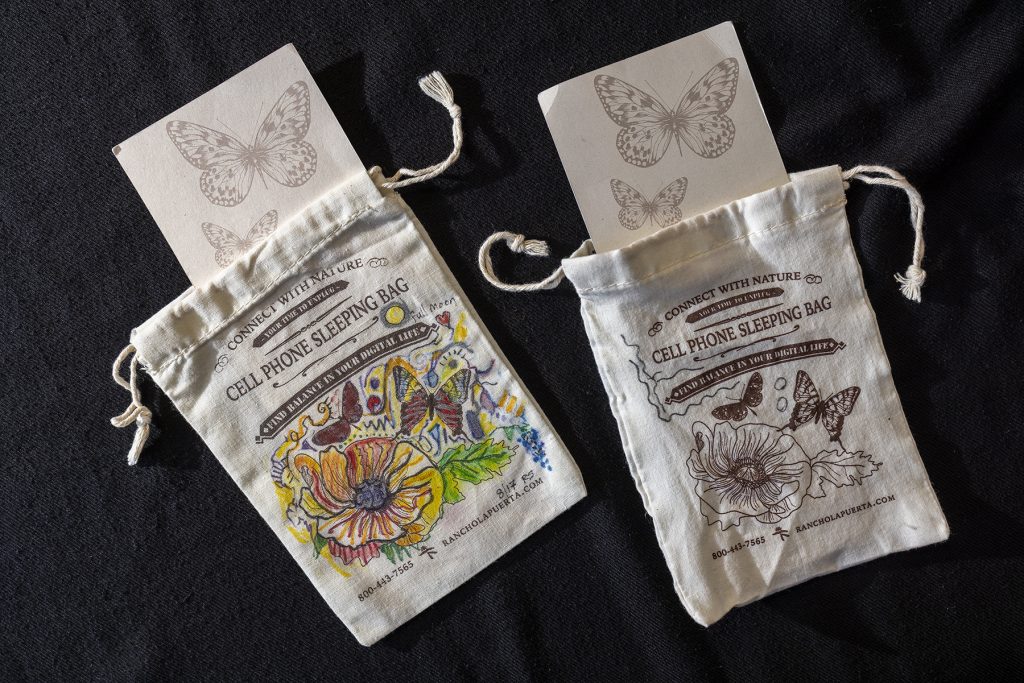
It’s a material reminder of their own expression, something they made, not something they bought. The cell phone sleeping bags with words and images become another way to carry that with them.
I think it helps people stay grounded. It’s a reminder of what they practiced here: positivity, reflection, creativity, and it’s something they can return to in their own lives.
Last question — where or when have you had your most unexpected “aha” moment?
The Ranch has been huge for me. The first time I came was for the very first Awake in the Spirit program for cancer survivors. My husband had just passed away from cancer, so it was a very powerful time.
On the last morning, I painted people’s healing thoughts. Someone showed it to Deborah, and she made a T-shirt with my writing on it. That was a moment of being seen and discovered by Deborah, and it led to my coming back and eventually teaching here.
That was in 2002, and now it’s 2026. This place feels like home to me. It’s a Garden of Eden. The creativity, the people, the integrity, I don’t know another place like it. I come here to find myself, and that has been one of the great joys of my life.
Visual Fitness 4 All® is part of Rancho La Puerta’s ongoing commitment to arts programming that nourishes creativity, connection, and lifelong learning.