“When Your Plate Shifts, Your Life Shifts”: A Conversation with Lia Huber
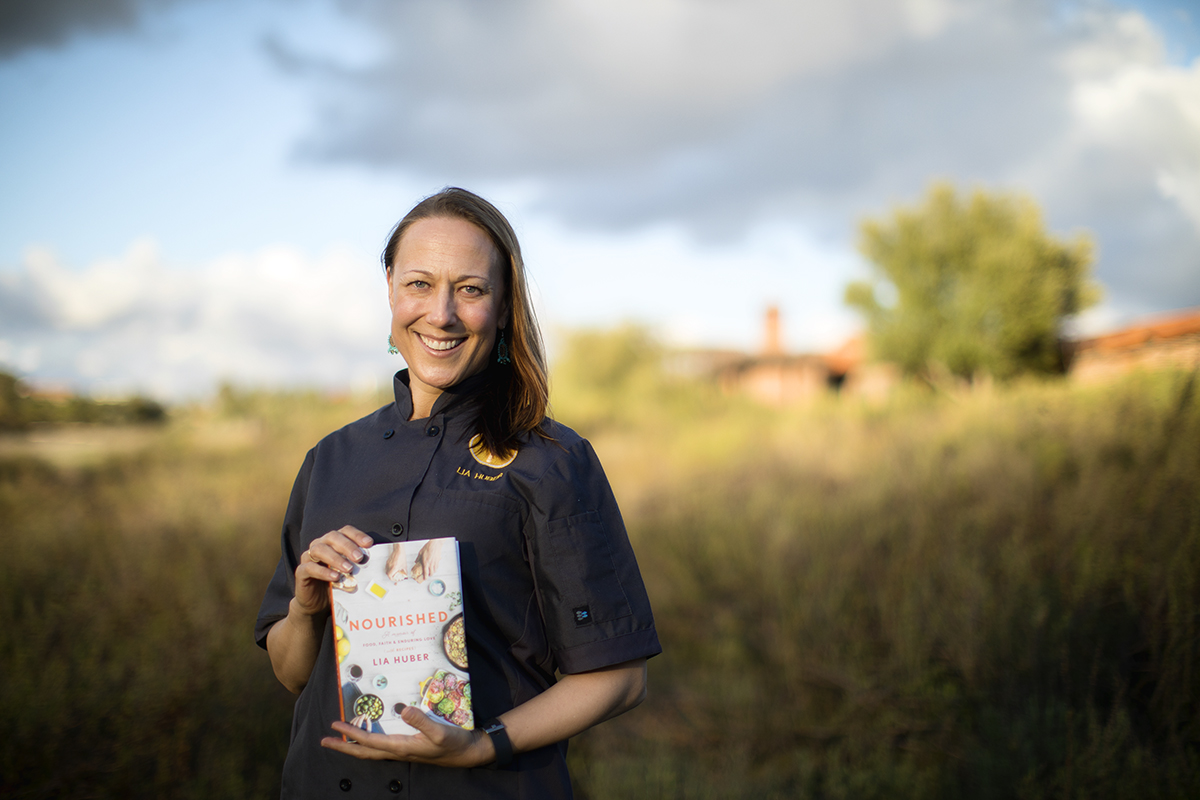
Lia Huber is a food writer, recipe developer, and the author of NOURISHED: A Memoir of Food, Faith and Enduring Love — a BuzzFeed Book of the Year that the New York Times called “a charming foodie’s travel memoir.” As the founder of Nourish Evolution and Cook the Seasons, she has spent more than two decades helping people find their way back to real food. I recently caught up with her after her week teaching at The Ranch.
Q1: You didn’t start as a food person. You started as a travel writer. Was there a moment or experience when food became a bigger anchor of your experience?
The pivot from travel to food was pretty gradual and organic (ha!). I started as a travel writer because after college, I discovered how much I loved writing, and I’d always loved exploring new places and cultures. So I decided to combine writing with travel.
But when I got married and moved from New York to California, food itself became an adventure. My husband, Christopher, and I used to go to Chinatown and buy ingredients to experiment with on our Friday night date nights.
And we’d go to the farmers’ market on Saturday. The colors, the flavors, the shapes, the tastes — for a girl who grew up a poster child of processed food, it was all a revelation. So between cooking at home and the San Francisco food scene in general, my curiosity and creativity were lit up. And that carried through to my writing — I started writing more about food, and developing recipes for magazines too.
But there had always been a thread of food with the way we traveled too. Christopher and I had always gravitated toward home exchanges or renting apartments — even way back nearly 30 years ago — rather than hotels, so we could go to the markets and cook with those ingredients ourselves. The markets were always where we felt most connected — both to people and their culture.
My book Nourished carries both threads — travel and food are so woven together that the New York Times listed it in their holiday gift guide under the travel section, while the reviewer (Andrew McCarthy … yes, that Andrew McCarthy) called it “a charming foodie memoir.” That crossover is still very much who I am.
Q2: You’ve mapped out the stages people move through when shifting from processed food to real food. Where does that shift usually stick?
My mind loves to take a lot of disparate information and sort it into buckets. So when I began analyzing my own journey with food, I noticed something interesting. Everyone’s story was different. But the stages everyone moved through were remarkably similar.
So I charted that path and named it the Nourish Evolution. I named it that intentionally because moving through these stages doesn’t just change what you eat. It nourishes every part of your being and how you show up in the world.
And it is an evolution — not a revolution. There’s no silver bullet. These are gradual shifts: building habits, developing rhythms, and gaining skills and knowledge that take root slowly and accumulate cumulatively over the long haul. We love to fast-track things in America, but skipping any of these stages leaves you with a weak foundation. And a weak foundation makes lasting change almost impossible.
Where the shift really sticks — where it becomes genuinely embedded as a way of life — is in the transition between Stage Four and Stage Five. And that’s really about building the right systems. Systems strengthen resiliency. Resiliency allows you to build consistency. And consistency is what transforms something from a one-off good day to: This is just the way things are. This is the way I live.
And I’m not talking systems for an idealized version of your life where everything goes as planned, and you have all the time and energy in the world. That’s not realistic. I’m talking about the kind ofsystems that can support you in eating and living in a nourished way, no matter what your week throws at you.
That’s the difference. That’s where the plate shifts. And when your plate shifts, your life shifts.
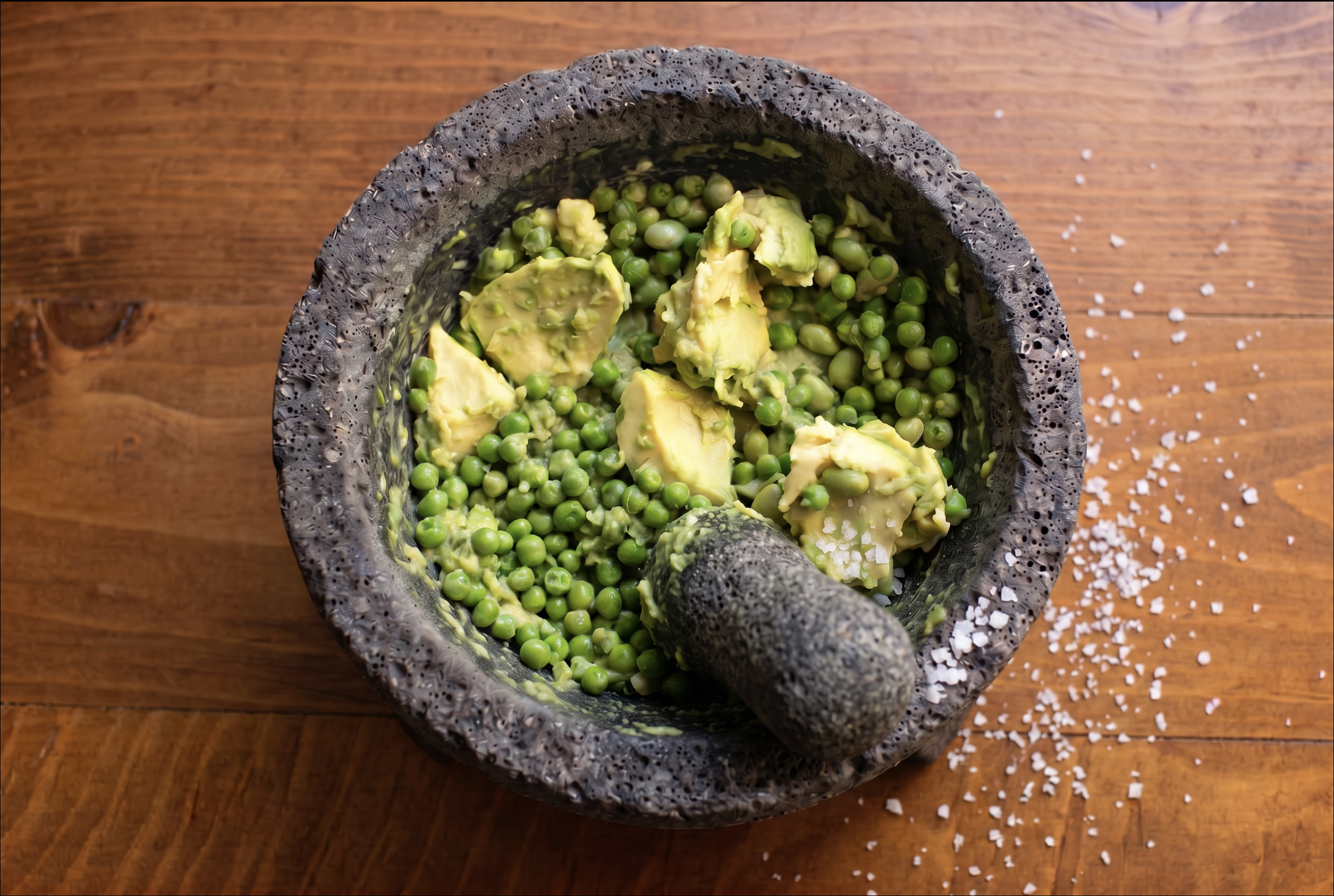
Get Lia’s Orange-Marinated Beets Recipe.

Q3: Your path deeper into this work came through two serious health crises. What did those seasons teach you about the difference between eating joy and deliciousness and truly nourishing yourself?
In my late 20s and early 30s, I thought I was doing everything “right.” Low-fat diets. Calorie counting. But I had about 20 extra pounds that wouldn’t budge — and a body that was getting sicker, not better. I was diagnosed with lupus. Then, about a year later, I went through a cancer scare that ended in a hysterectomy.
That was the moment I thought: What I’m eating might literally be making me sick.
So I leaned into my writing credentials to get access to experts around the world — nutritionists, scientists, physicians — asking them all the same question: what should I actually be eating to nourish myself?
What I found was remarkable. Long-term, large-cohort studies that had been running for 20-plus years were all converging on the same blueprint as an answer to that question: lots of seasonal vegetables, healthy fats, whole grains, and protein you feel good about — plant-based, seafood, pastured meat. What I now call a nourished plate.
But here’s what really surprised me. These were scientists — and I always thought of scientists as only caring about data and numbers. Yet every single one of them paused to add something along the lines of: it’s not just the nutritional components. It’s also the joy around the table. The pleasure of slicing into an heirloom tomato. The smell of garlic hitting a hot pan. That’s part of the equation too.
I had actually witnessed that kind of joy firsthand and never understood it. I lived in Paris my junior year of college and spent a summer in Greece, and I watched my French and Greek friends — healthy, fit, beautiful people — eat with total ease and zero shame. It was so different from the way I ate. They had a completely different relationship with food than I did.
Once I made my own shift, once I started building my plate the way those experts described, everything changed. I quickly lost the 20 pounds I’d been fighting for decades — without ever feeling like I was on a diet. My lupus diagnosis was eventually revised to fibromyalgia, and those symptoms cleared within a couple of years. And for the first time in my adult life, I was genuinely enjoying food instead of fighting it.
Looking back through the lens of the Nourish Evolution, I can see exactly where I was during that time — stuck at the second step, what I call the Pinnacles of Should-Angst. I was white-knuckling my way through diet after diet, see-sawing between feeling deprived when I was sticking to a diet and feeling guilty when I was actually enjoying food.
And my health crisis slammed me up against the third stage — The Hump: that pivotal moment when you realize what you’ve been doing is never going to work, and you finally get serious about changing — not just what you eat, but how you think about food.
Q4: On the way to one of your cooking classes, guests were still raving about your lecture “What to Eat to be Nourished and How to Make It Happen.” What is it about The Ranch that makes that conversation, and that experience, so ripe?
That was such a fantastic session. I was floored by how engaged everyone was, by all the emotions that came out, and by how conversations continued to ripple throughout the entire week.
And I think The Ranch is such a perfect place to have that conversation. There’s such a profound sense of non-judgment. You are seen at The Ranch. You are loved for exactly who you are and where you are right now. And that environment gives people permission to look honestly at where they are in their own journey and feel good about that awareness. Not ashamed of it.
In almost any other context, someone might discover they’re at Stage Two of their Nourish Evolution and immediately think: Ack! I should be at Stage Five by now! And they spend the entire experience beating themselves up instead of actually moving forward. There’s no room for that at The Ranch. Awareness is celebrated as a step forward — because it absolutely is.
And then there’s the one-two punch: you sit in a lecture where you learn the Nourish Evolution framework, a lightbulb goes off when you understand where you are, and you get fired up when you learn what unlocks the next stage.
And then you go to a cooking class at La Cocina Que Canta a few days later, and we pick gorgeous seasonal produce from the garden with Salvador, and we transform it into a simple, stellar meal. You can see what the transformation looks like. You can literally taste it. And that is powerful fuel for sustaining the momentum when you get home.
Q5: For someone who wants to feel more nourished but doesn’t know where to begin, what’s one small choice they can make today?
Well, it’s funny you should ask. I was so inspired by the reaction to the What to Eat to be Nourished (and How to Make it Happen in Real Life) session that I came home and recorded it to share with those who weren’t able to attend the live session.
So if anyone is interested in making the shift to real, nourishing, delicious food stick, the best thing that you can do is click this link and register for the training. So you can learn exactly where you are on your Nourish Evolution and what keys unlock each stage.
And at the end of the training, I’ll include a link where you can let me know what stage you’re at, and I’ll give you the exact next step to move forward from there, along with a personalized action plan. I really wanted to make it as easy as possible to take the next step and gain momentum without getting overwhelmed by too much information or a million choices.
So if you’re interested in making a shift to a nourished life — and you’re interested in making it stick — I really hope you’ll go through that training.
And I hope to see you the next time I’m at The Ranch so you can tell me in person!